generative installation
8K–4K responsive video projection, generative sound | 2026
Glacial Lake Dissonances is a generative sound installation that turns the growth of Himalayan glacial lakes into a slowly shifting chord. As glaciers retreat, meltwater collects behind unstable walls of moraine, forming lakes that can burst without warning. Between 1990 and 2018 the volume of glacial lakes worldwide grew by around 48 percent. In the Koshi, Karnali and Gandaki basins of Nepal and Tibet, researchers count dozens of lakes they consider potentially dangerous. These changes unfold far from most viewers, at altitudes above four thousand metres, and are known largely through satellite images and scientific tables.
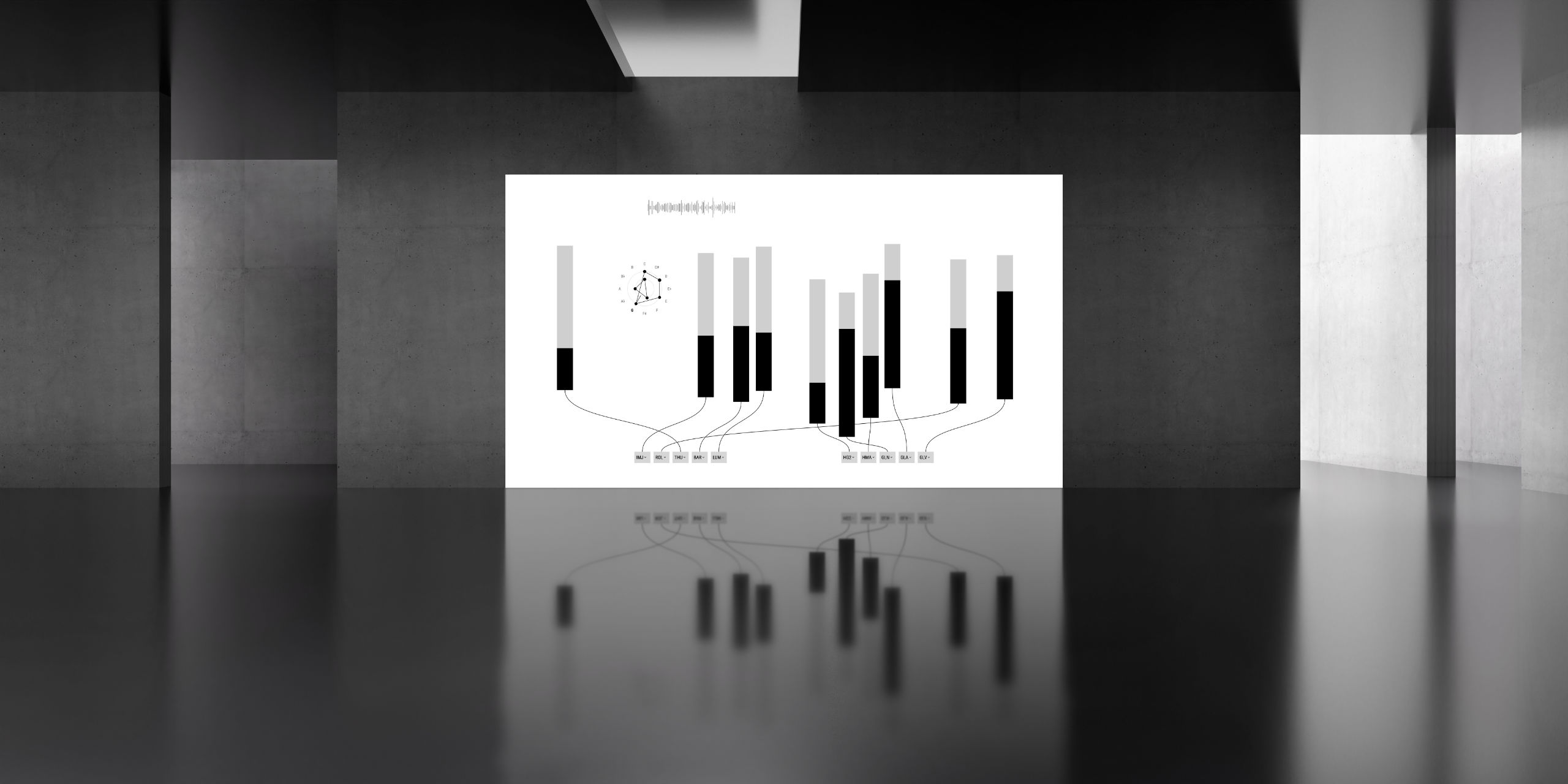
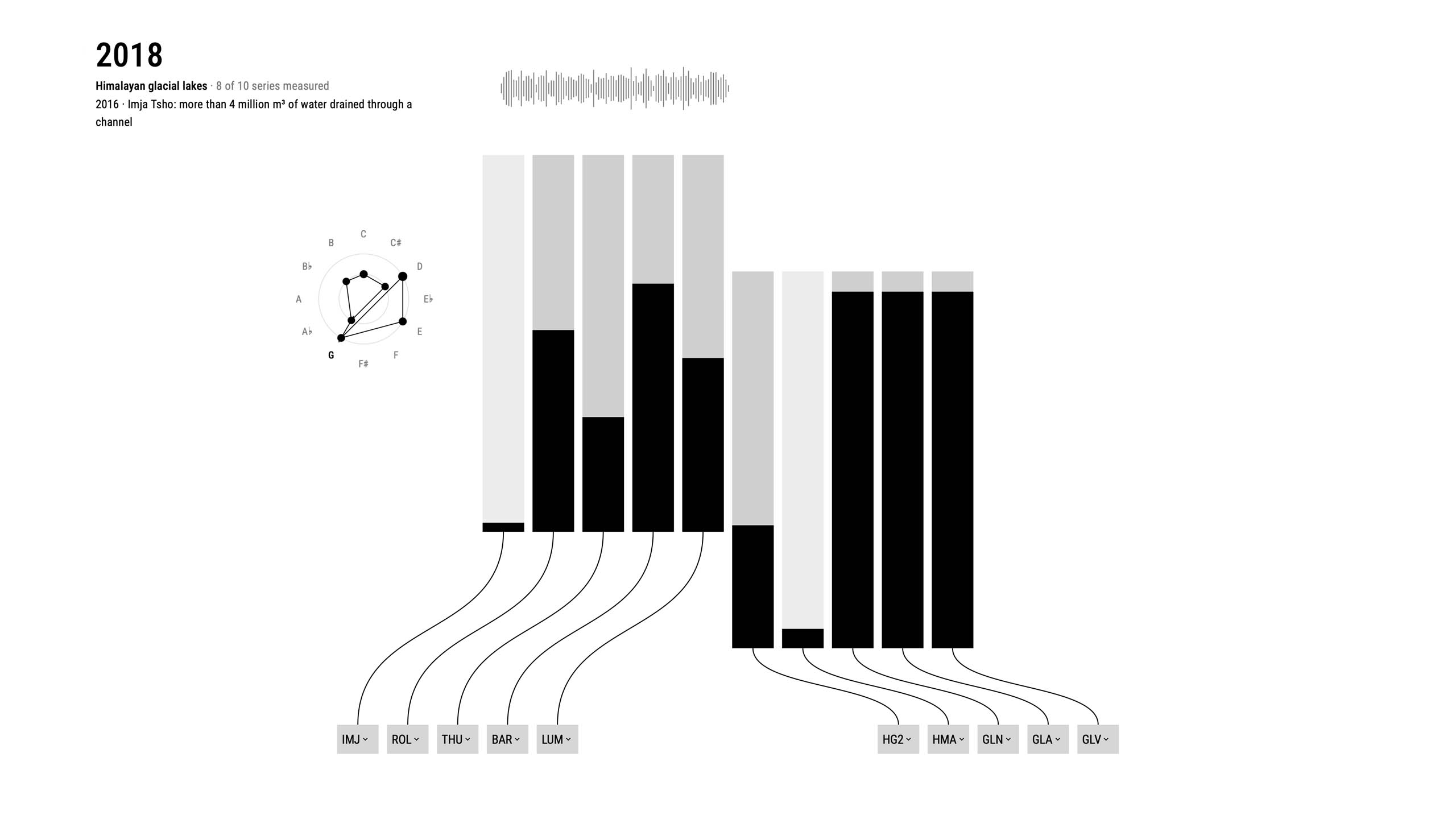
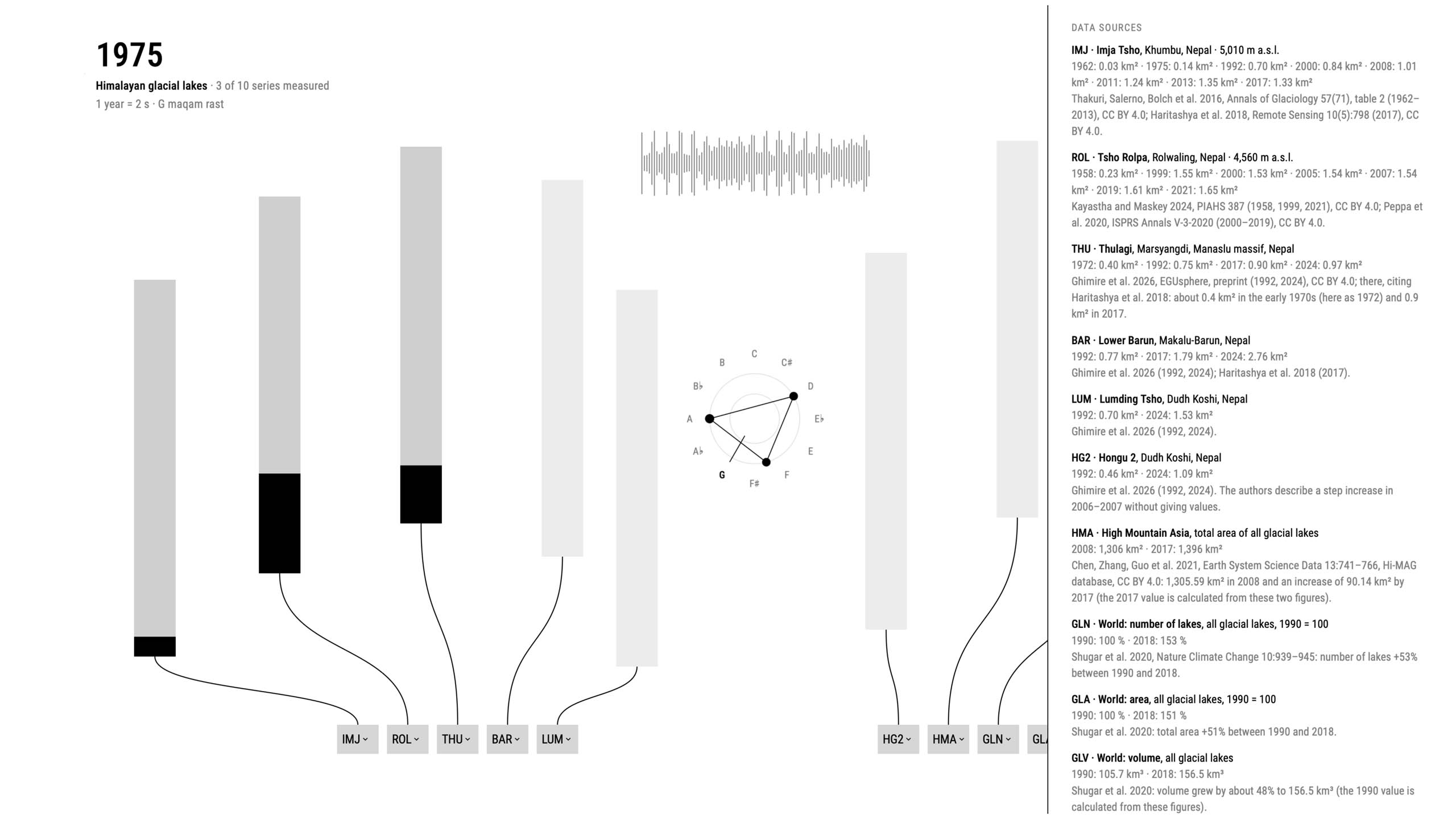
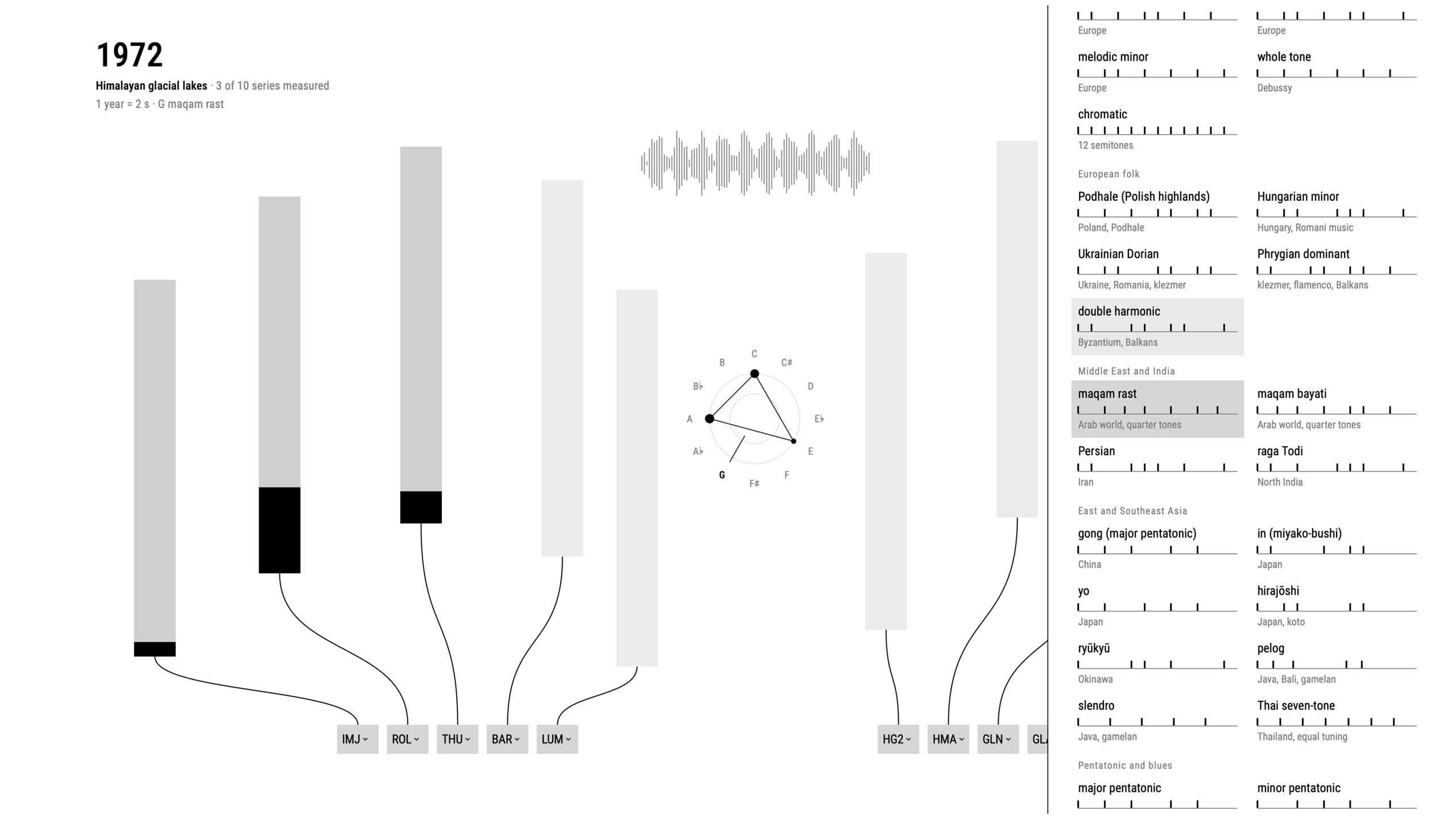
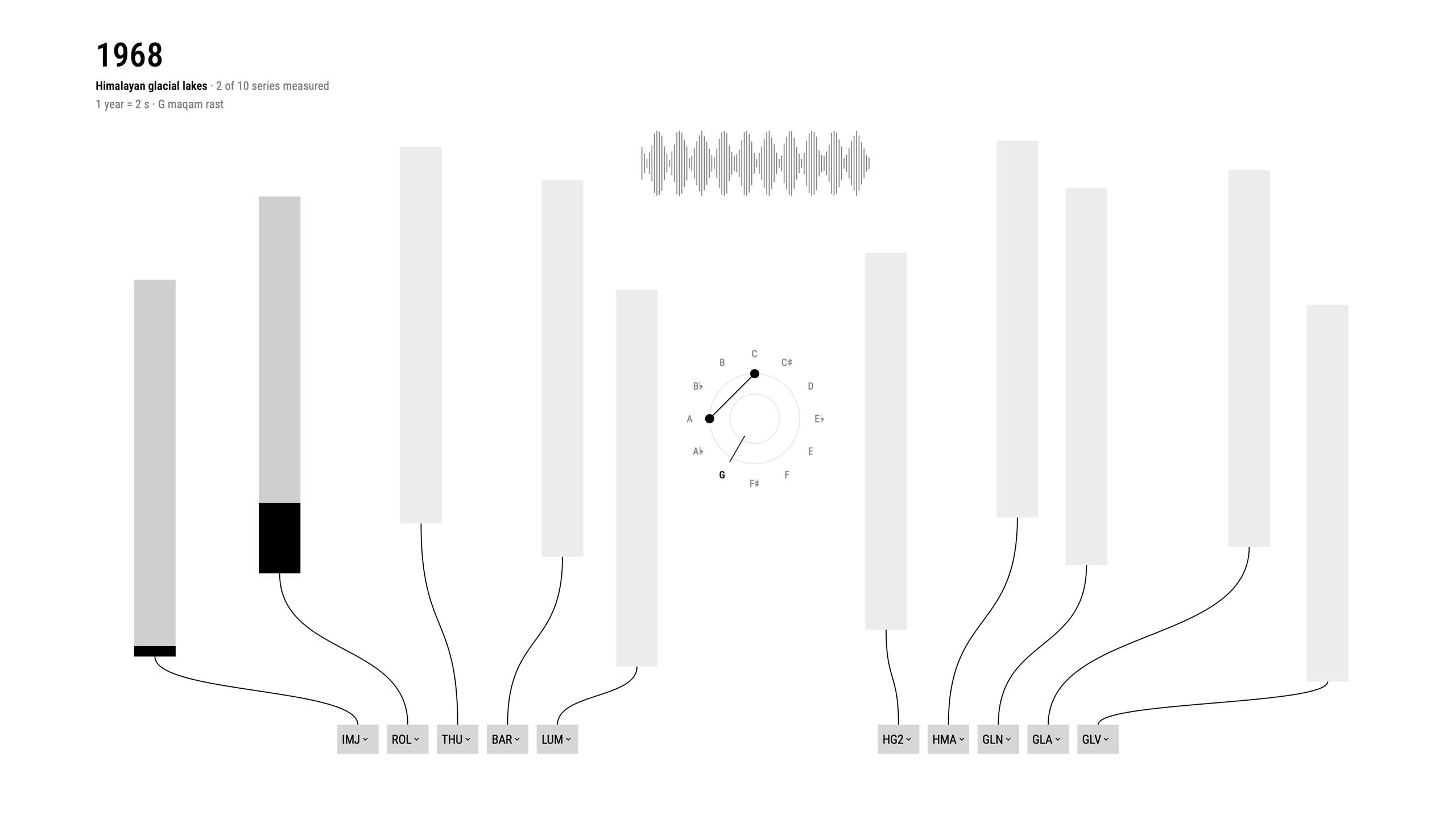
The installation listens to those tables. Ten voices follow ten series of measurements: the surface areas of six lakes in Nepal, among them Imja Tsho and Tsho Rolpa, alongside regional and global totals drawn from open-access research. Each voice is a vertical axis on which the current value sets the pitch, connected by a cable to its source. As a lake expands, its tone climbs; as many expand at once, the harmony thickens into an increasingly restless cluster. The lakes themselves remain silent; what we hear is the measured trace of their growth, translated without embellishment.
Time unfolds across decades of observation, from 1958 to 2024. A voice sounds only while measurements exist, and between them the values are interpolated, so the chord also records the history of attention: a single tone at first, then a crowded, unstable sound as satellites and fieldwork multiply. Outburst floods and engineered drainages, from Dig Tsho in 1985 to Thame in 2024, surface as low rumbles beneath the music. A full cycle lasts about four and a half minutes before it begins again.
Conceived for projection and touch screens, the piece lets visitors choose which lakes sound together and rearrange the modules in space, which also places each voice in the stereo field. A waveform and a pitch clock make the chord visible, and scales from European folk music to Arabic, Japanese and Javanese traditions retune the work, testing how cultural systems of harmony absorb a changing landscape. Its dissonances are measured data.
The work extends artist’s long-standing practice of reading landscape as a score, developed in Landscape Video Score, Polyphonic Landscape and Environmental Aleatorism, and continues the logic of Stockmarket Dissonances, in which market data composes a chord in real time. Here the score is written by warming itself, quietly, one square kilometre at a time.